


Pure Evil
Publisher: Penguin Books
Format: Paperback
ISBN: 9781405939898
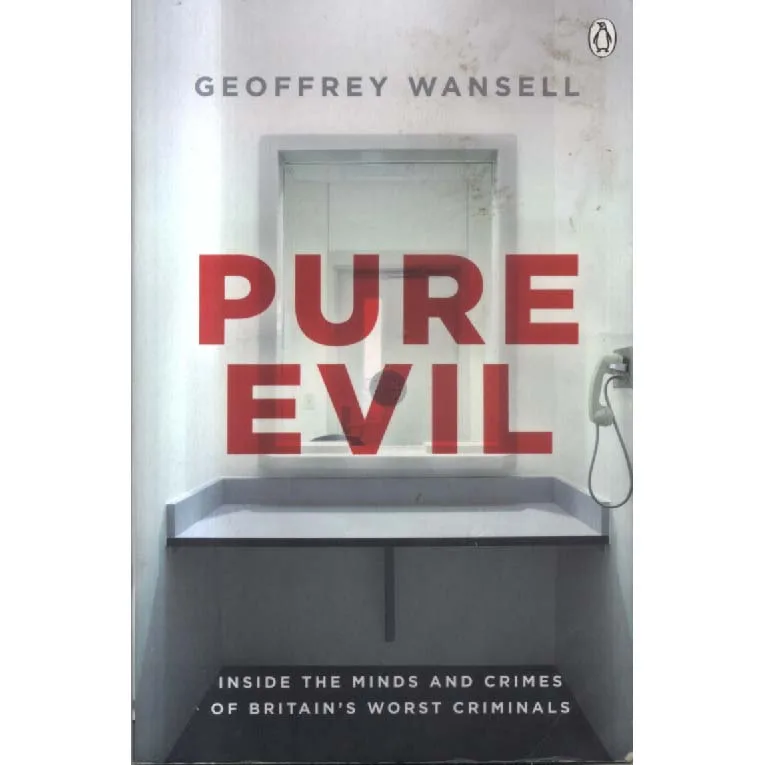
There are titles that flirt with understatement, and then there is Pure Evil, which strides in wearing black gloves and making absolutely no effort to soften the mood. Geoffrey Wansell’s 2016 book, published by Penguin Books, is not here to offer a gentle meditation on moral ambiguity or a soothing exploration of humanity’s better angels. No, this is a work concerned with the darker end of the spectrum: the crimes, minds and acts that make ordinary people put the kettle on, sit down heavily, and say, “Well, that’s enough humanity for one day.”
Wansell is, of course, very much at home in this territory. He has long been associated with true crime and criminal biography, and he writes with that particular blend of narrative clarity and forensic curiosity that the genre requires. A good true-crime writer has to do more than simply catalogue horrors. He has to construct a readable account of what happened, who did it, why it mattered, and how such things come to exist in a supposedly civilised society. That is the strange craft of the field: shaping chaos and monstrosity into a book you can actually finish.
The title Pure Evil is wonderfully bold in its refusal to hedge. Modern discourse often prefers layers, nuance, and elaborate explanations, and quite right too in many areas of life. But true crime has always retained a certain appetite for naming the worst things plainly. The phrase suggests cases so shocking, personalities so chilling, or actions so appalling that ordinary language begins to feel insufficiently outraged. Whether one believes in “pure evil” philosophically is one question. Whether the phrase sells books in the true-crime section is another, and the answer there is a resounding yes.
Books like this appeal because they sit at a peculiar crossroads of revulsion and fascination. Readers do not come to them for comfort. They come to understand the unthinkable, to peer into the machinery of criminal acts, and perhaps to reassure themselves that such darkness can at least be examined, documented and contained within covers. There is something almost ritualistic about true crime in that sense. Society takes its worst acts, writes them down in orderly prose, and places them on shelves as if knowledge might serve as a kind of barrier.
There is also a quiet irony in the whole enterprise. Human beings claim to dislike horror, yet remain remarkably willing to buy paperbacks full of murder, cruelty and wickedness, provided the cover design is strong and the writing brisk. The appetite for true crime says something slightly awkward about us all. We like our evil narrated, structured, and explained. We prefer it with chapter headings. We want the abyss, certainly, but ideally indexed and available at a reasonable price.
Published in 2016, this book belongs to that period when true crime was already evolving from lurid back-shelf sensationalism into something more mainstream, polished and respectable, while still trading happily on the same old irresistible ingredients: dark psychology, infamous cases, human damage, and the grim magnetism of the worst behaviour imaginable. Penguin’s involvement gives it that added air of legitimacy, as though one might be studying social darkness in a wholly elevated literary manner rather than reading, with horrified enthusiasm, about people who did appalling things.
This Fair copy, sold by Crappy Old Books, has the sort of condition that feels oddly appropriate for a true-crime paperback. A pristine copy of Pure Evil might seem almost too innocent. A fair one suggests it has been handled, read, perhaps left face-down in a state of troubled interest while its reader briefly reconnected with the safer parts of life. It has lived a little, which somehow suits the subject.
A strong pick for readers of true crime, criminal psychology, and dark factual narratives, Pure Evil offers exactly what its title promises: a look into the grimmest corners of human conduct, delivered by a seasoned writer who knows how to shape horror into story. Not uplifting, certainly. Not cosy. But undeniably compelling in the way only the bleakest parts of reality so inconveniently are.
Keep browsing: See more Crime books Other books by Geoffrey Wansell
